
Many paths forward.
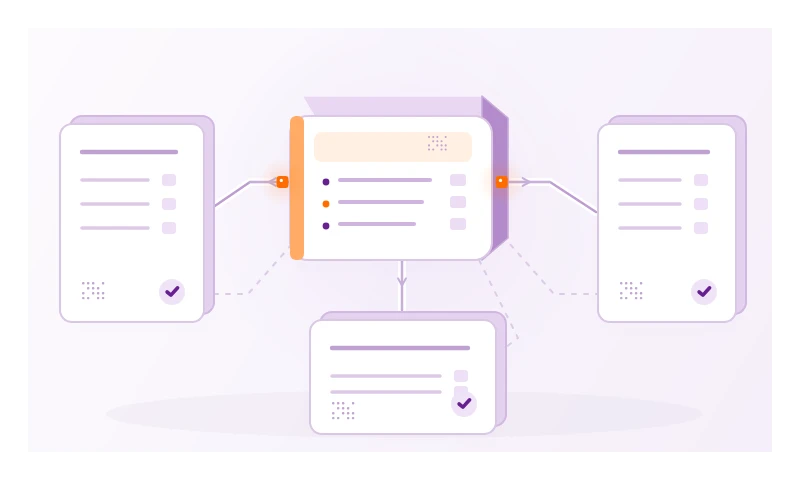
Network participants can process and include sites in parallel, instead of making every transaction wait for one sequential path.
A new approach to distributed infrastructure. Parallel by nature. Connected by design.
Grape is designed for up to 2,700 TPS of network capacity per user node. Move the slider to explore the relationship between participation and potential.
A scalable foundation for high-volume applications, from digital economies to intelligent connected services.
A simple node × capacity illustration, not a benchmark or live network measurement. Real-world scaling includes coordination and network constraints.
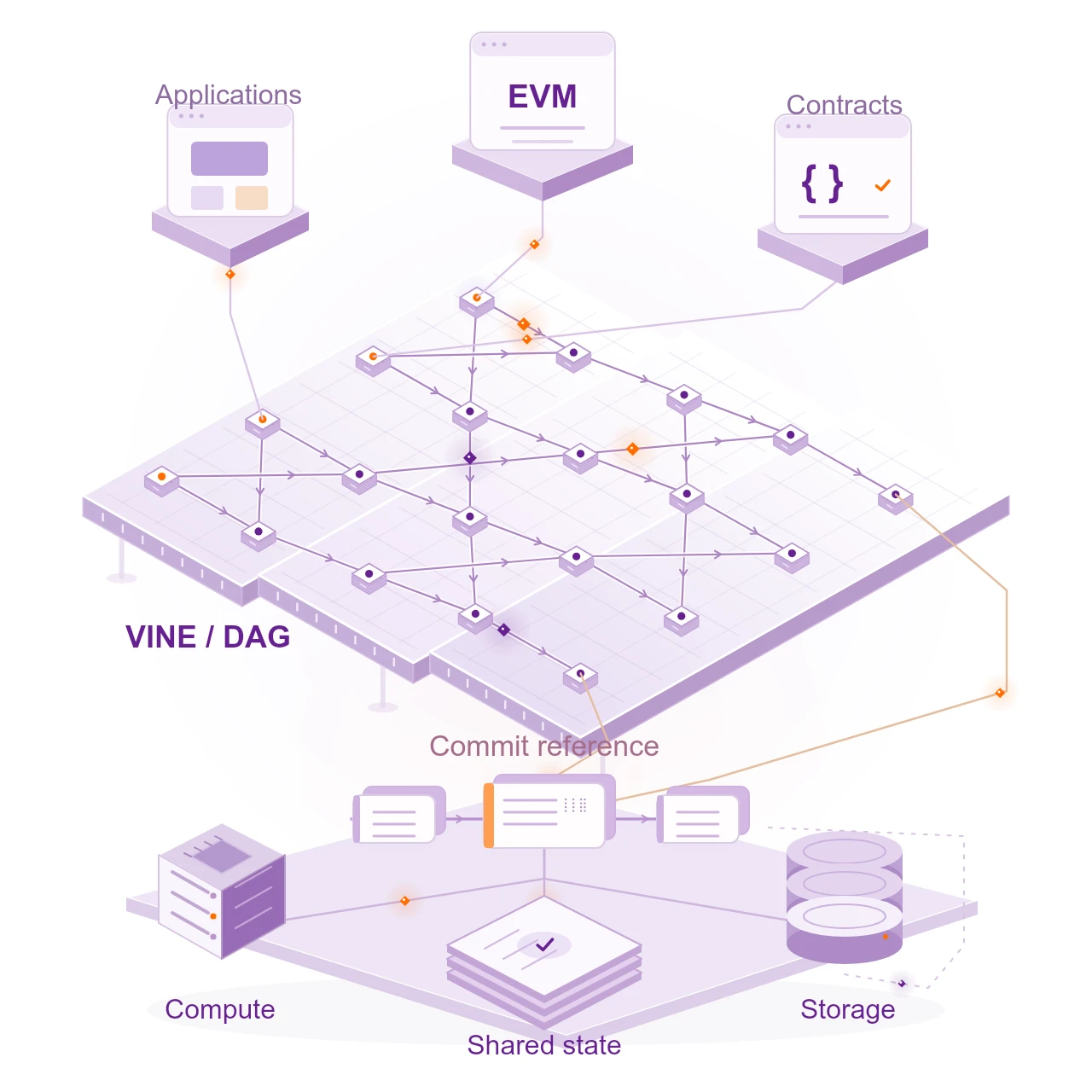
Transactions form a graph of connected sites. Alongside it, commits coordinate account balances and smart-contract state.
Network participants can process and include sites in parallel, instead of making every transaction wait for one sequential path.
Commit transactions synchronize local ledger views and provide coordinated state for accounts and contracts.
The architecture connects growing demand with contributed network resources, subject to real-world hardware and coordination limits.
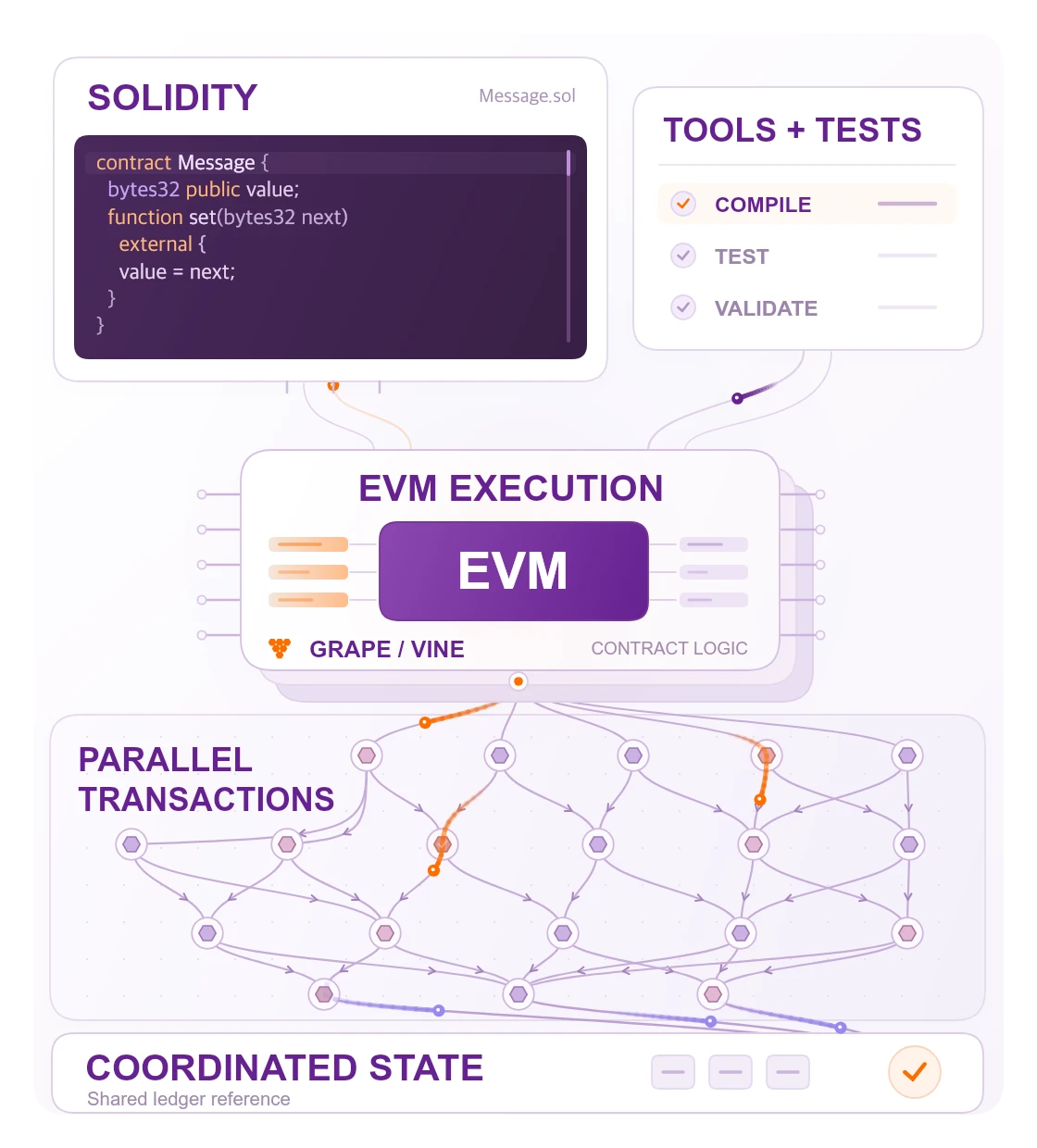
Grape brings EVM compatibility to DAG-based infrastructure, connecting the Ethereum development model with a network built for parallel activity.
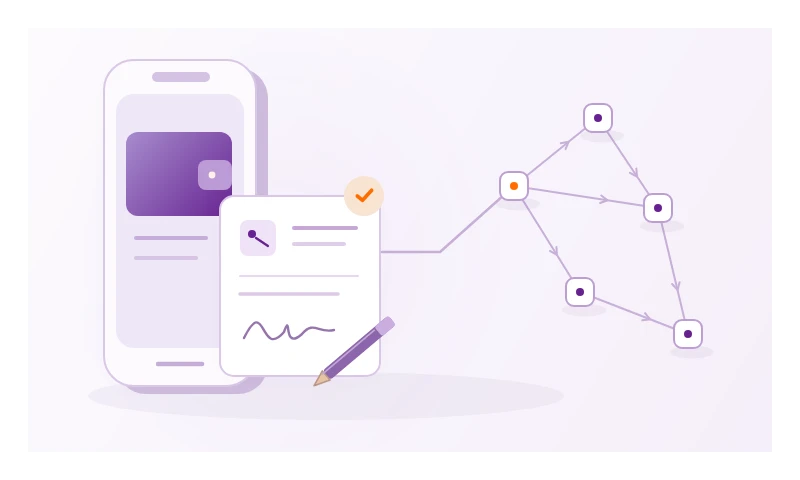
Create and sign transactions. Connect to the ledger without taking on the full work of storing and verifying the graph.
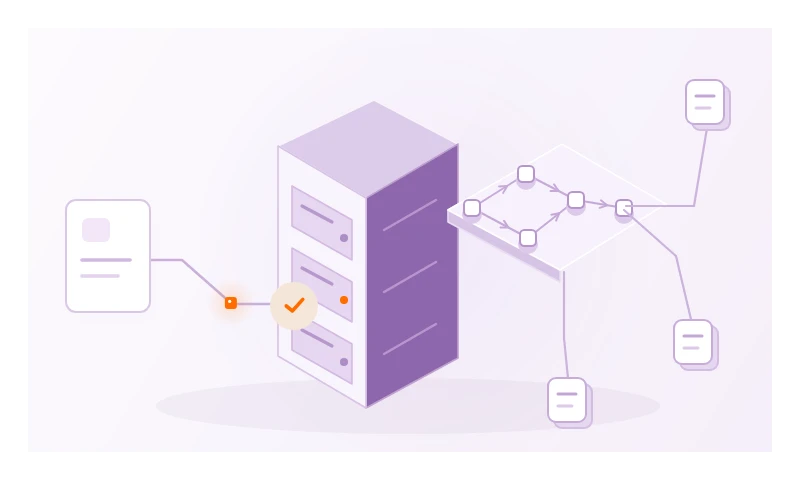
Verify transactions, assemble sites, select vertices and share updates with peers. Maintain a local view of ledger integrity.
Support the commit and state-coordination mechanisms described in VINE. Operational participation rules belong to the network specification.
Roles are summarized from the VINE technical paper. Current hardware requirements, validator enrollment and operator instructions require the published network configuration.
Grape’s architecture also explores distributed computing and storage: connecting contributed resources with applications, digital assets and intelligence.
DART’s design segments and encrypts data across user nodes.
PoAI describes a model linking contributed resources with AI participation.
These are architecture concepts from the Grape presentation; deployment availability is separate from the design.
 Interactive demo
Build a calm project planner for my team. Give us tasks, priority filters and a weekly overview.
const tasks = [
  { title: "Plan the next release",
    priority: "high", done: false }
];

function addTask(title) {
  return { title, done: false };
}

const completed = tasks.filter(
  task => task.done
);A little structure. More room to grow.