A network to build on. Intelligence to build with.
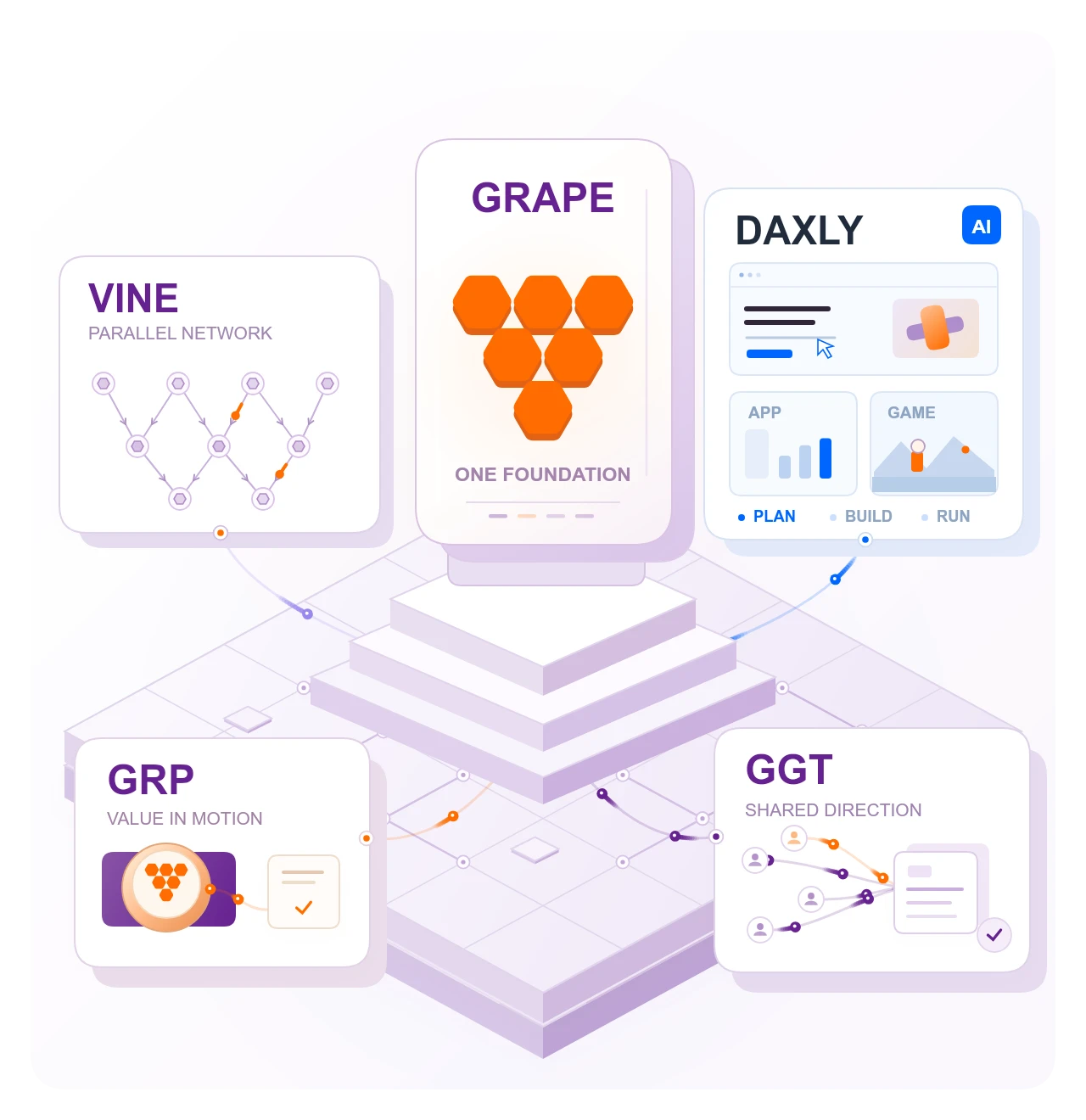
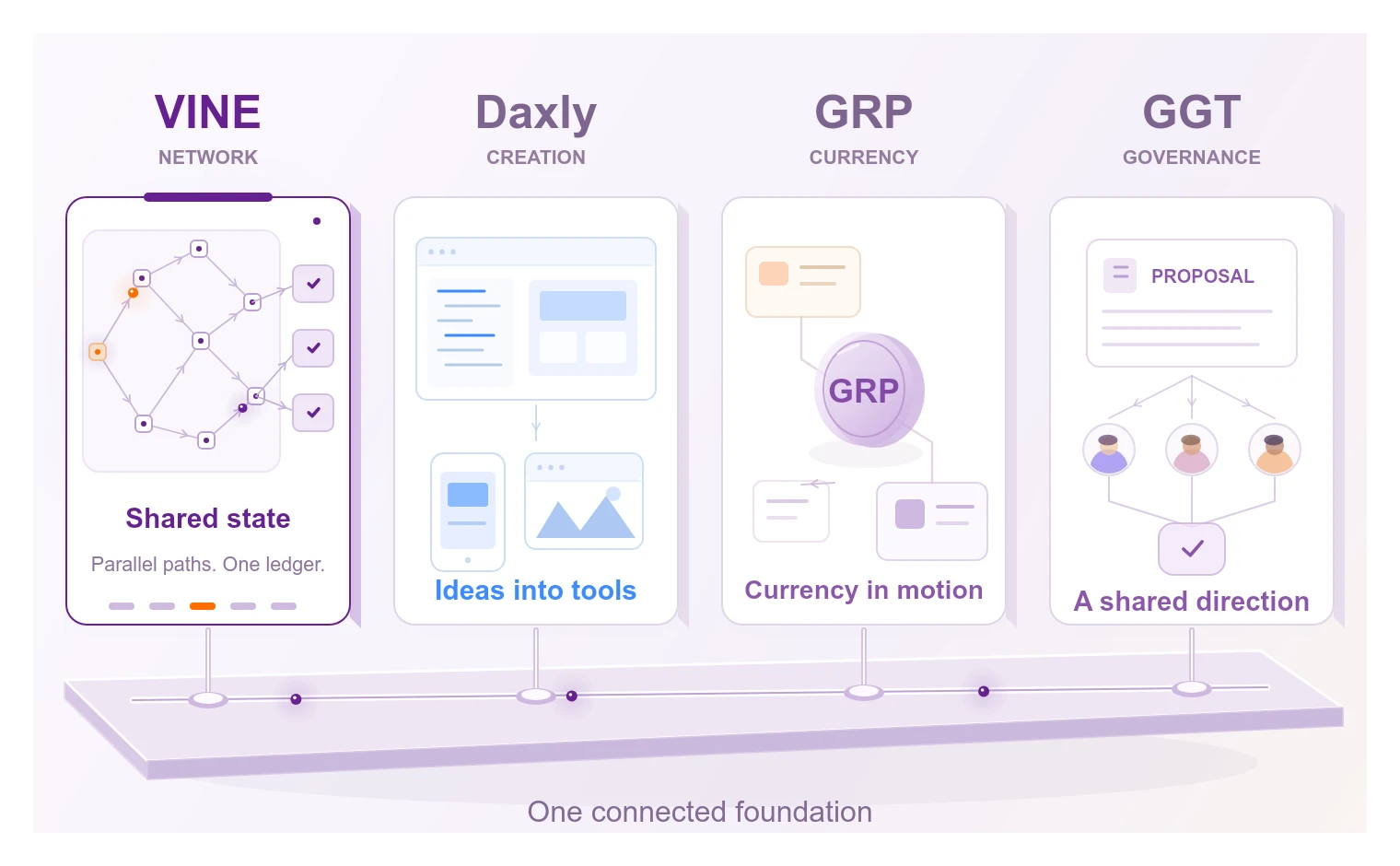
Grape brings a parallel network, programmable value, community governance and autonomous AI into one ecosystem. VINE connects the activity. GRP and GGT give currency and governance their own roles. Daxly helps people turn ambition into something real.
Creating an application is one part of the journey. People also need a place to connect, a way to exchange value, shared rules and the ability to keep improving what they have made.
Grape brings those disciplines into one product vision. AI lowers the effort of creation. The network provides a programmable foundation. Currency supports value, and governance gives participation a role in the ecosystem’s direction.
Together, they open more paths from an individual idea to a shared experience.
Different strengths. A common direction.
Meet the ecosystem.
Explore the role each part plays—and how the pieces connect.
Explore a role to bring its connections into focus.
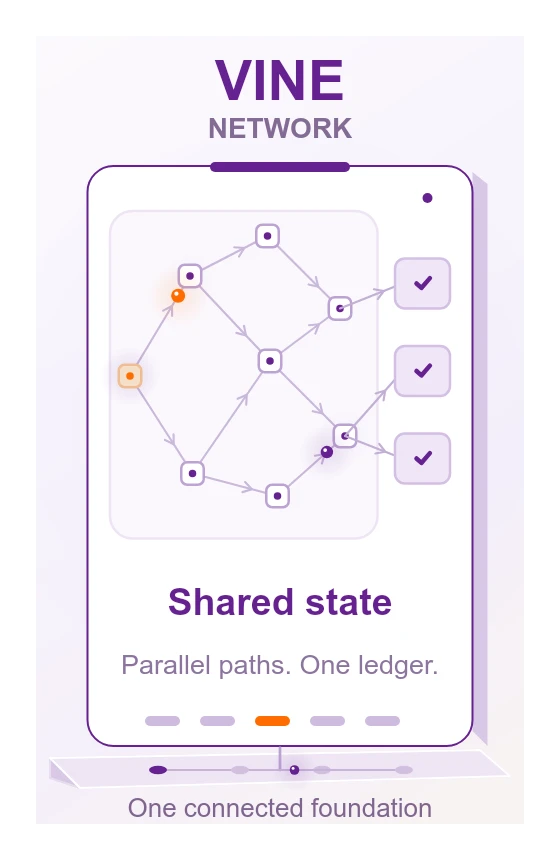
VINE / The network
A foundation for parallel activity.
VINE is Grape’s DAG architecture. Transactions form connected sites across a graph, while a separate commit structure coordinates a shared view of ledger state. That foundation brings parallel activity together with the consistency applications need.
Grape pairs this approach with EVM compatibility, giving developers familiar tools for smart-contract applications.
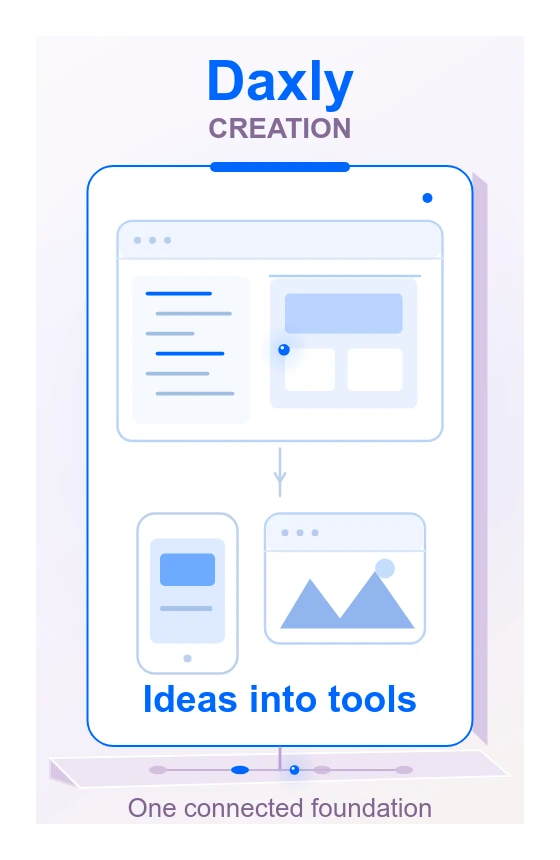
Daxly turns ordinary-language requirements into plans, code, creative assets and working experiences. It supports apps, websites, games, media and smart-contract creation, with tools to test, refine and publish supported projects.
Persistent agents extend that work into ongoing project and business operations, 24/7, within the accounts, permissions and budget you provide.
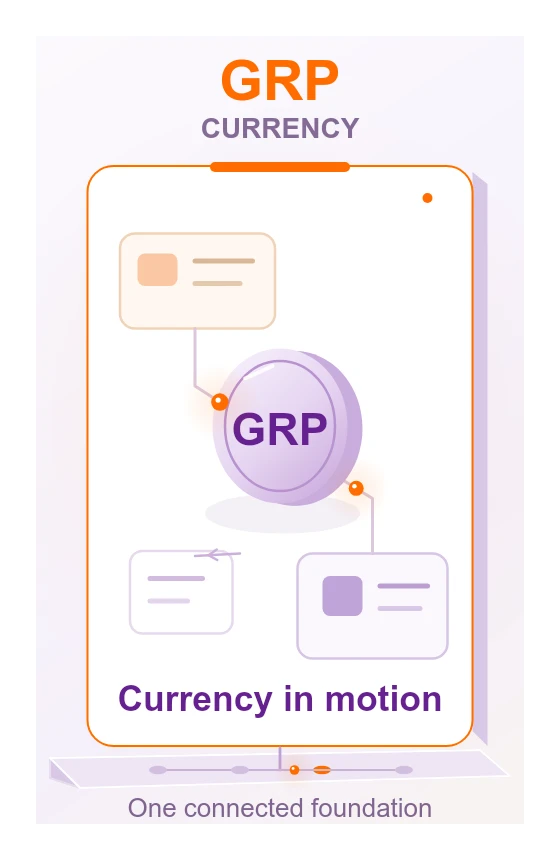
GRP is the core currency that powers the Grape chain. It gives the ecosystem a common currency around which builders can explore digital interactions, applications and services.
Its role is distinct from governance. Current asset specifications and network requirements guide how a particular project uses GRP.
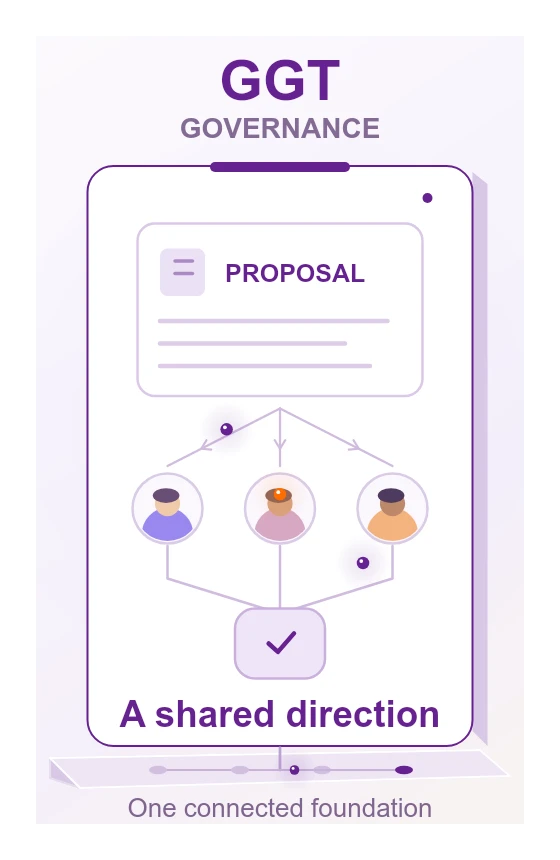
GGT powers governance across much of the Grape chain. Its purpose connects participation with the direction of the ecosystem: ideas, proposals, discussion and decisions about what to develop.
Participation follows the current governance framework, including its eligibility requirements, voting rules and decision process.
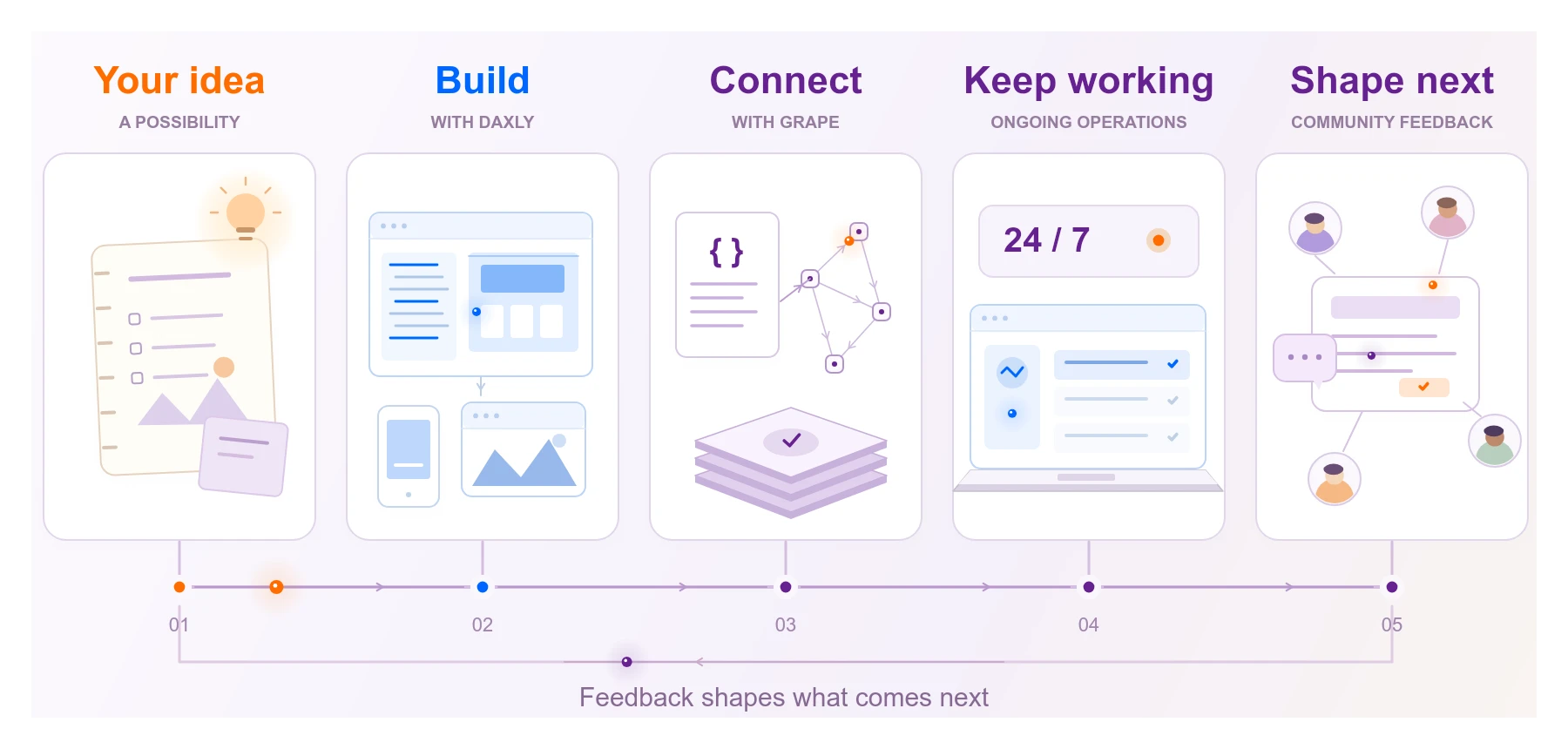
The value of creation continues after a first build. Grape’s vision connects that first spark with the work of launching, operating and growing an experience.
Idea → create → connect → operate → evolve
Swipe the diagram, or focus it and use the arrow keys, to explore all five stages.
01
Describe
Start with the people you want to serve, the experience you imagine and the problem worth solving.
02
Create
Use Daxly to shape a plan, build software and develop the creative material around it.
03
Refine
Review the result, test behavior and improve the details that make the experience useful.
04
Connect
Add the network features your project needs, using verified configuration and tested integration paths.
05
Launch
Publish the experience, share it with people and learn from how they use it.
06
Keep going
Assign continuing work, from research and content to updates, maintenance and the next iteration.
Web4 by Grape
The power of Web3. The ease of Web2.
AI creation+A decentralized foundation
Web4 is Grape’s vision for decentralization made accessible through AI. More people can begin creating apps, websites and games, then explore the shared state, ownership and programmable rules that make a network useful.
A focused idea can move toward a first build in minutes with Daxly. Scope, integrations and testing determine the work needed to make that experience ready for people.
Interfaces, gameplay and media can work alongside selected on-chain assets and logic. Each useful experience gives someone a new reason to connect—and another creator a place to begin.
Web4 describes Grape’s product vision, rather than a universally defined web standard.
Understand what the vision builds on
A closer look at the foundation.
The original architecture helps explain Grape’s approach. Current network configuration and release information guide implementation.
STATED DESIGN CAPACITY2,700 TPS
Up to 2,700 TPS of network capacity per user node.
Explore the capacity modelA design specification; actual performance depends on implementation and network conditions.
01
Parallel transactions. Coordinated state.
VINE’s technical paper describes sites that reference earlier sites in a directed acyclic graph. A separate commit structure brings verified activity, account balances and contract results into a coordinated ledger reference.
02
Familiar tools. A different foundation.
EVM compatibility connects Grape to familiar Ethereum development concepts. Developers can prepare contract logic and application interfaces, then confirm the current network parameters and supported deployment requirements.
03
A broader view of shared resources.
Grape’s architecture materials also explore distributed storage and contributed compute. DART describes segmented, encrypted storage; PoAI links contributed resources with AI participation. These are design concepts whose service availability depends on implementation.
The technical paper records an earlier implementation stage. Its timing parameters and limitations provide architectural context.
Grape is a connected ecosystem combining a DAG-based network, EVM compatibility, GRP as its core currency, GGT for governance and Daxly for AI-powered creation and continuing work. Web4 expresses the vision that brings these roles together.
What does 2,700 TPS per user node mean?
It is Grape’s stated design capacity per user node. The network page lets you explore a simple participation model. Actual throughput depends on implementation, hardware, coordination and network conditions; the figure is not a live measurement.
Do I need to be a developer to begin?
You can begin with an ordinary-language brief in Daxly. Developers can work with code and familiar EVM concepts. In either case, review, testing and the right network configuration remain part of building a useful application.
What does autonomous work look like?
Daxly’s persistent agents can continue assigned project and business tasks while you are away. You define the work and its boundaries. Available capabilities, connected accounts, permissions and budget determine what an agent can carry out.
How can I take part?
Explore the developer, node, community or governance paths, then bring a specific project or question to the team. Contact info@grap3.com for current participation information, network details or a conversation about working together.
One good idea can start a connection
What will you make possible?
Bring your ambition, your experience or your next question. Let’s explore where it could go with Grape.